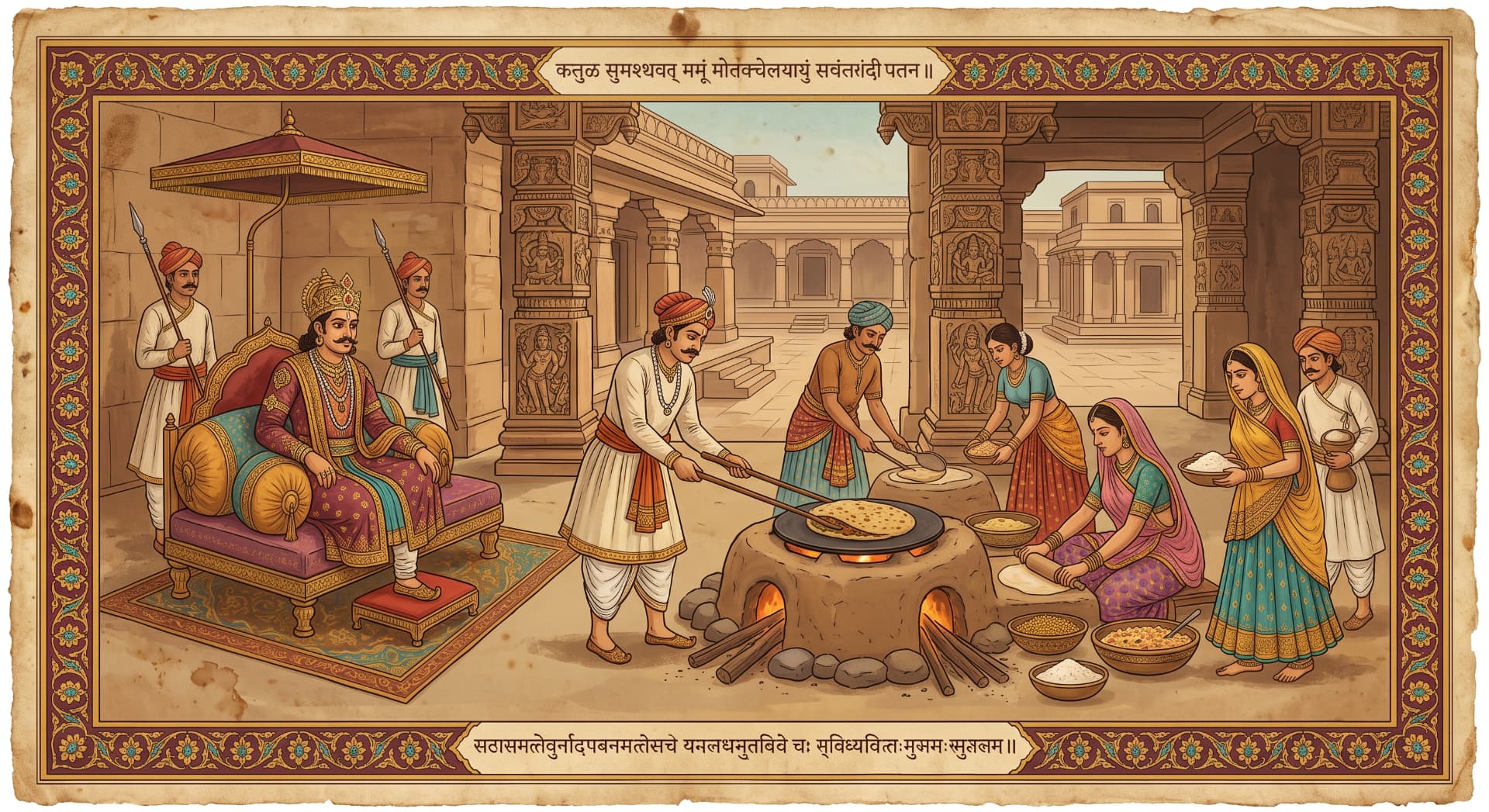
0112th Century
Manasollasa
The Sanskrit encyclopedic text compiled under the Chalukya king Someshvara III records a sweet stuffed flatbread among courtly preparations, placing the form of bobbatlu firmly in the medieval Deccan.
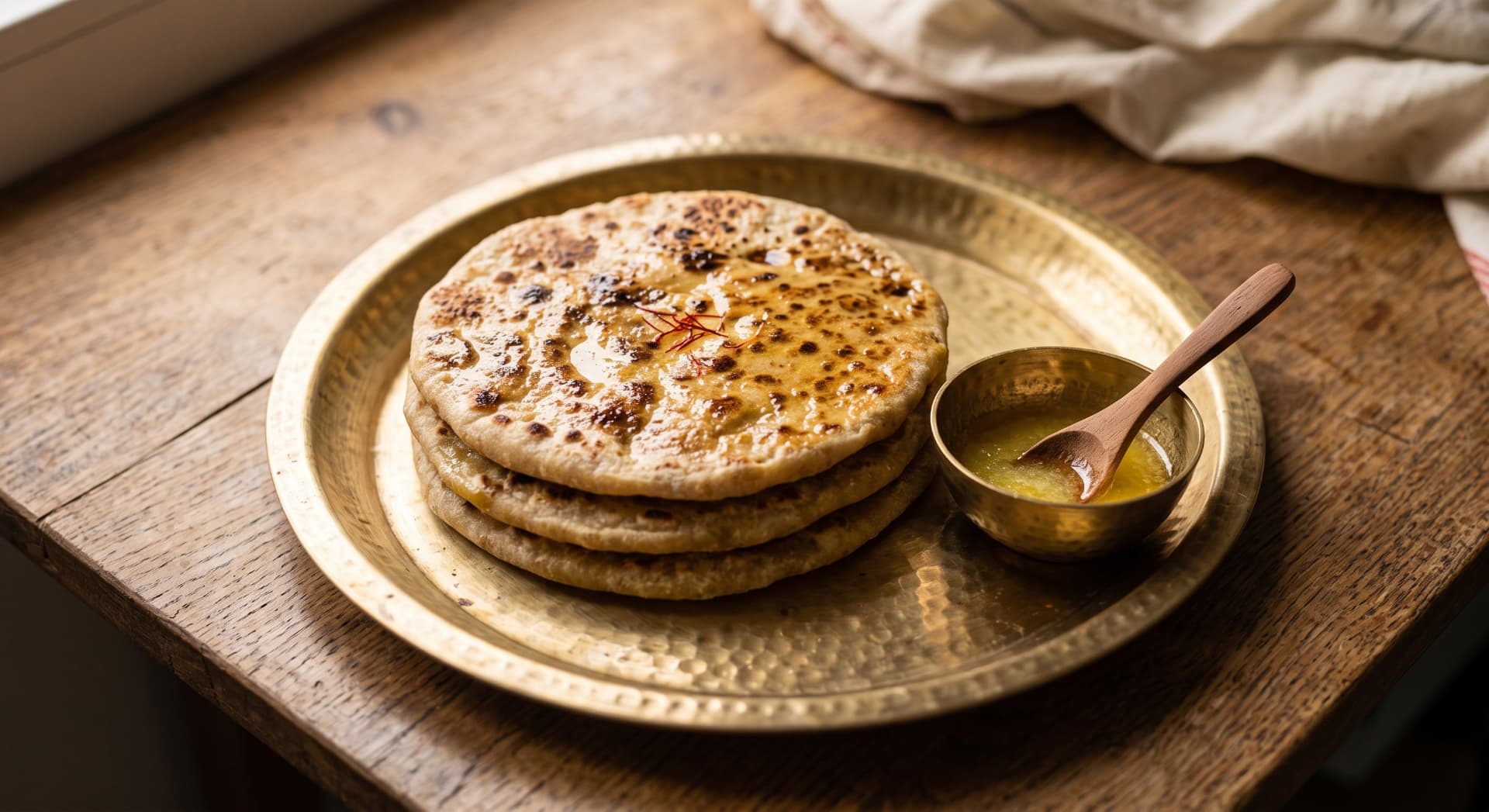
A Culinary Heritage Study
Research, documentation, and culinary direction by Sarada Kumari Mitana, chef and food researcher in culinary arts and nutrition.
Origins and History
The written record of bobbatlu runs from medieval Sanskrit compendia through Telugu classical literature into present-day regional kitchens. Scroll the timeline horizontally to follow it.
The Sanskrit encyclopedic text compiled under the Chalukya king Someshvara III records a sweet stuffed flatbread among courtly preparations, placing the form of bobbatlu firmly in the medieval Deccan.

The preparation moves from court to temple prasadam and household festival cooking, tied to Ugadi, Holi, and harvest observances across the Deccan plateau.

The Telugu literary work by Allasani Peddana references the sweet within a courtly culinary vocabulary, giving one of the earliest Telugu-language attestations of the dish by name.

Trade routes and migration carry the preparation west and south. Fillings shift between chana dal and toor dal, and the wheat wrapper adapts to local milling practice.

Contemporary nutrition research revisits the dish: glycemic response, flour composition, and fiber content are measured rather than assumed, without displacing the tradition.
Scroll sideways to advance the timeline.
The Science of Reformulation
Three findings from published work on reformulating a traditional sweet flatbread, stated in plain language.
Jaggery is frequently described as a low-glycemic sweetener. Measured against refined sugar, its glycemic index is only modestly lower and the difference narrows further once it is cooked into a dense filling. The meaningful nutritional advantage of jaggery lies in trace minerals and the absence of refining, not in blunted blood glucose response. Portion size remains the primary variable.
Replacing a portion of refined wheat flour with whole wheat or millet flour changes gluten development and water absorption. Substitution beyond roughly one third by weight produces a wrapper that tears during rolling. Rest time and a higher hydration ratio recover most of the elasticity, allowing a meaningfully higher whole-grain fraction without loss of the characteristic translucent stretch.
Adding soluble fiber to the puran filling, through retained chana dal solids and small additions of psyllium or oat bran, raises fiber content per serving while slowing gastric emptying. Sensory testing showed no significant difference in perceived sweetness or texture at low inclusion levels, making this the least disruptive of the three interventions.
Published Paper
Full methodology, sensory panel data, and nutritional analysis are available in the published journal article.
Read the full paperLink placeholder. Provide the journal URL and it will be wired in.
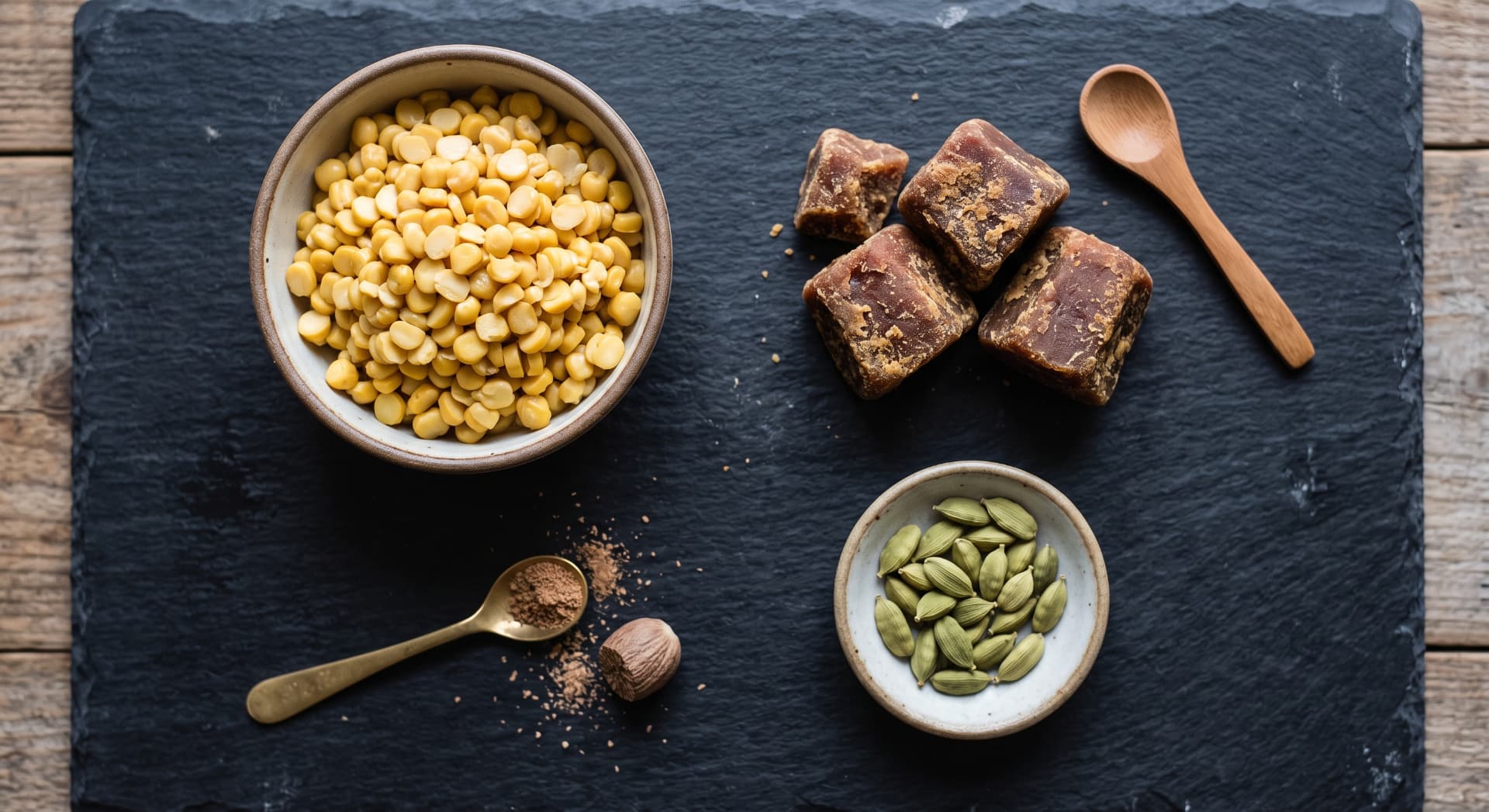
Bobbatlu Across India
The same preparation appears under different names, fillings, and festival contexts across the subcontinent.
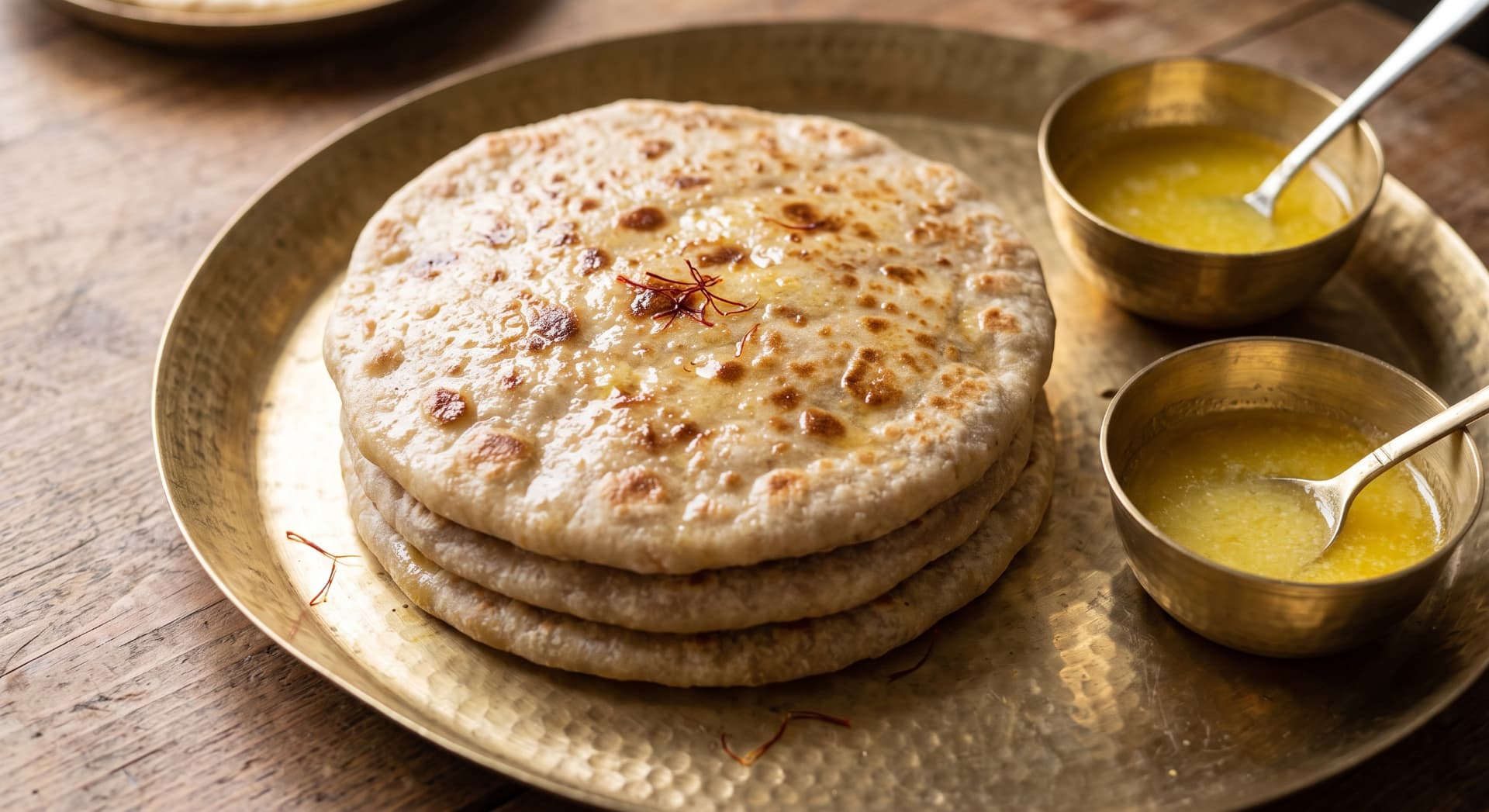
Andhra Pradesh & Telangana
Chana dal and jaggery filling, thin wheat wrapper, finished with generous ghee. Central to Ugadi and wedding feasts.
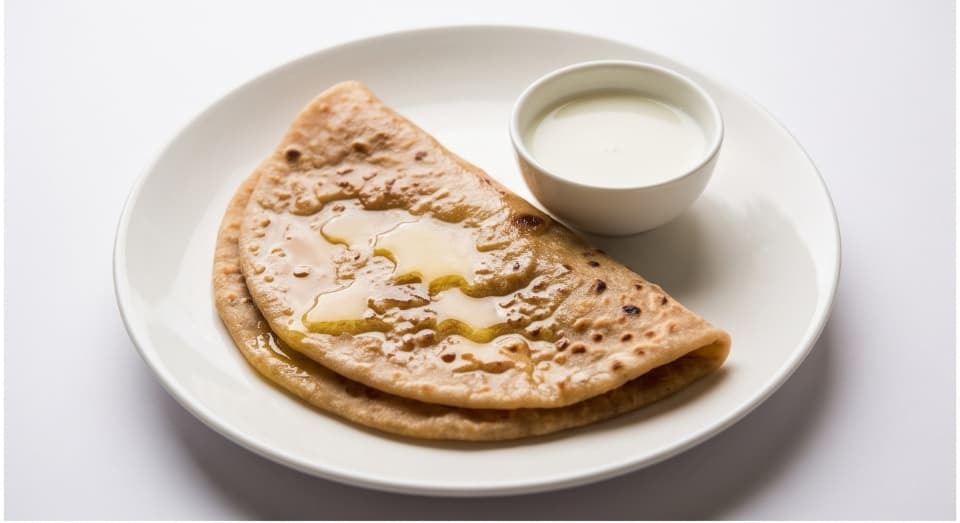
Maharashtra
Puran of chana dal, jaggery, cardamom and nutmeg. Served with warm milk or a spoon of ghee, traditional at Holi.
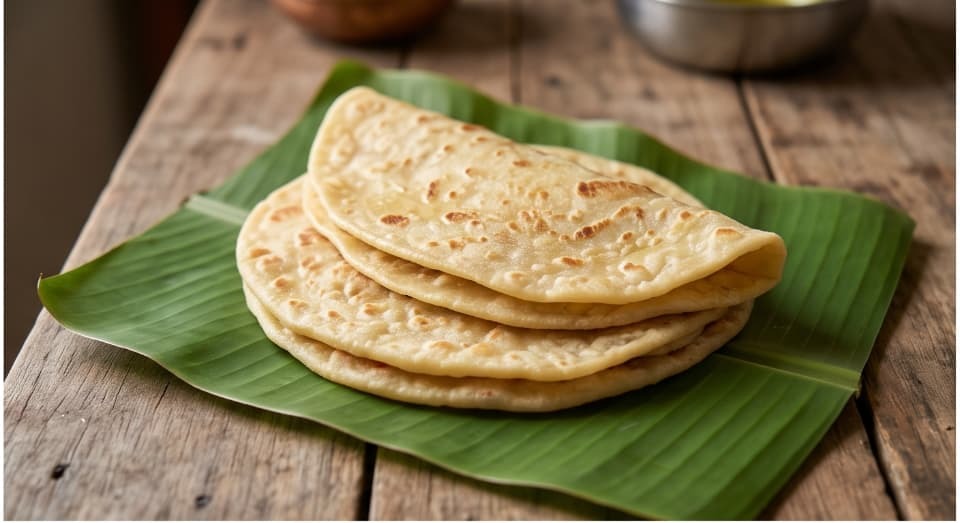
Karnataka
Rolled paper-thin, often with coconut and jaggery in place of dal. A fixture of Ugadi and temple offerings.
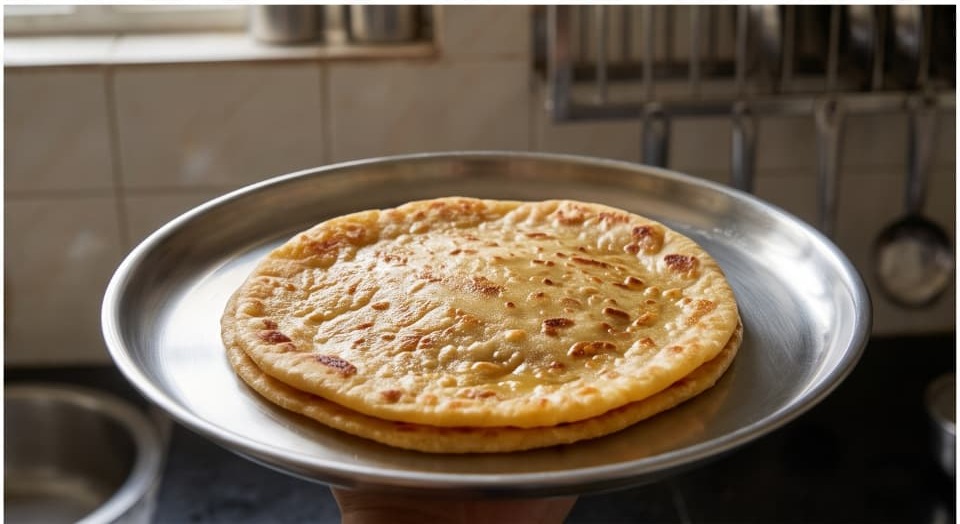
Gujarat
Toor dal filling, subtly spiced, typically part of a festive thali alongside savoury dishes.
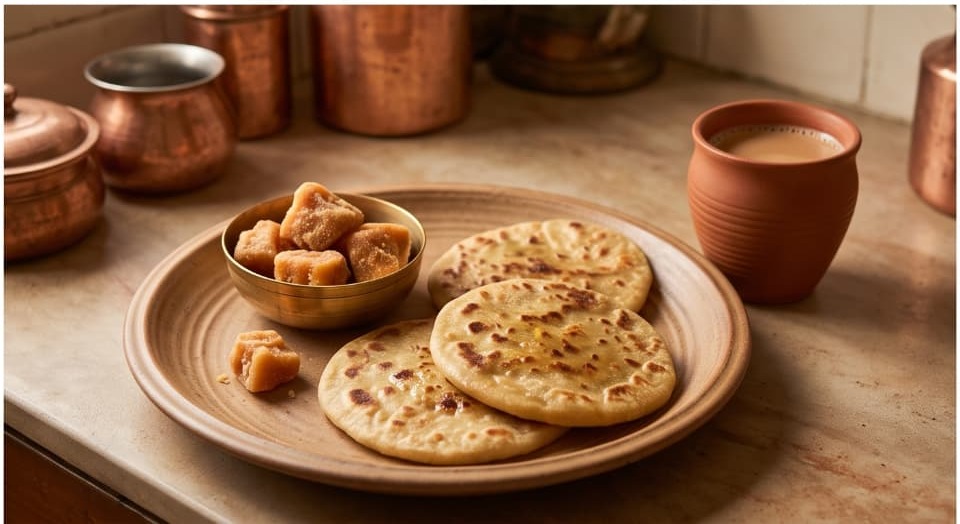
Tamil Nadu
Softer, sweeter, sometimes tinted with saffron and paired with a thin coconut milk sauce.
Kerala & Diaspora
Rice-flour and coconut variants, plus contemporary versions carried abroad by migration and restaurant menus.
The Recipe
Yields 10 pieces. Active time 60 minutes, plus a two-hour dough rest.
For the puran (filling)
For the wrapper
To finish
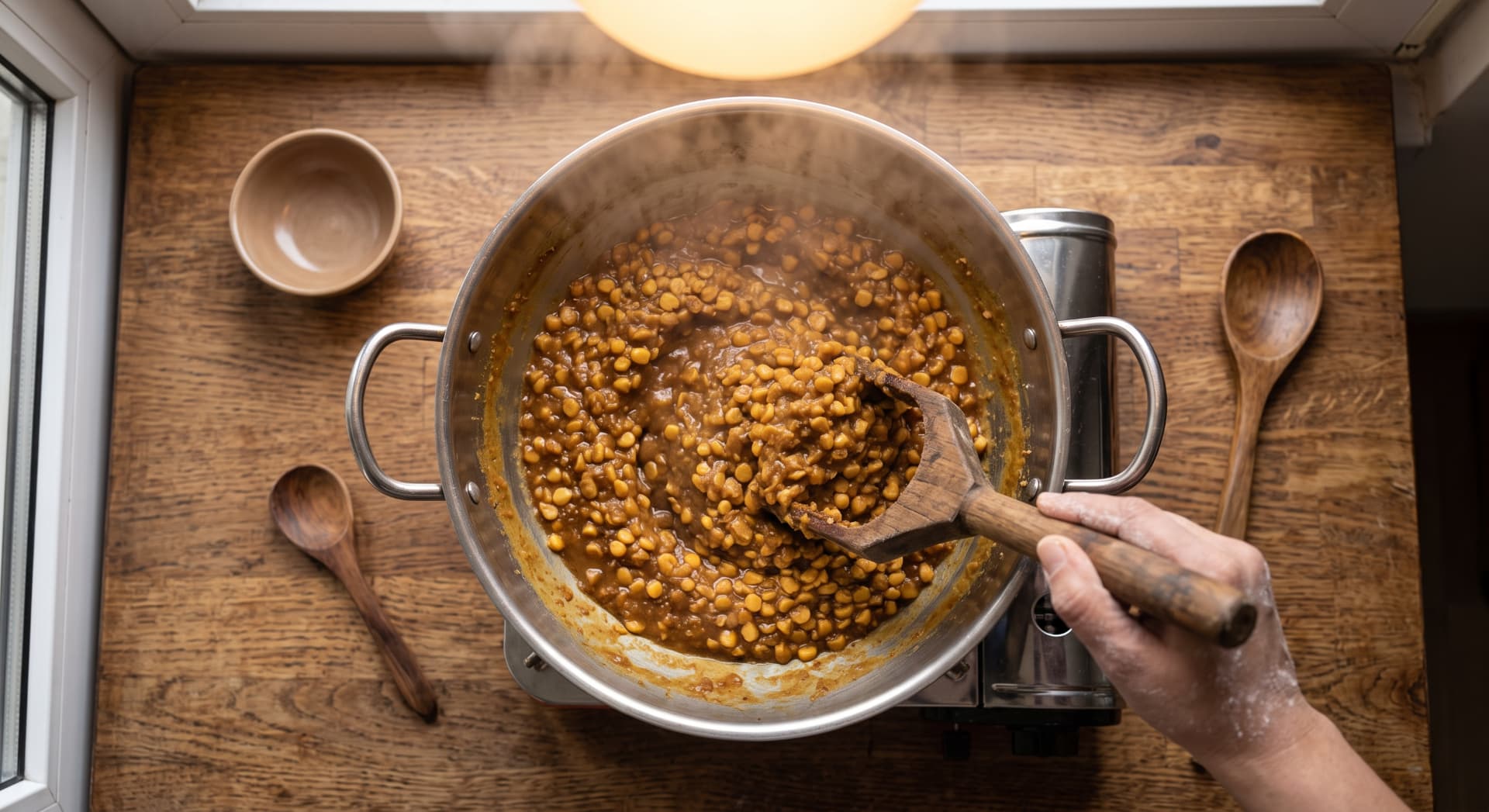
Simmer the chana dal in three parts water until fully soft but not collapsing. Drain thoroughly and reserve the cooking liquid for kattu.
Combine drained dal and jaggery in a heavy pan over low heat. Stir until the mixture thickens and pulls from the sides. Add cardamom, nutmeg and ghee, then cool.
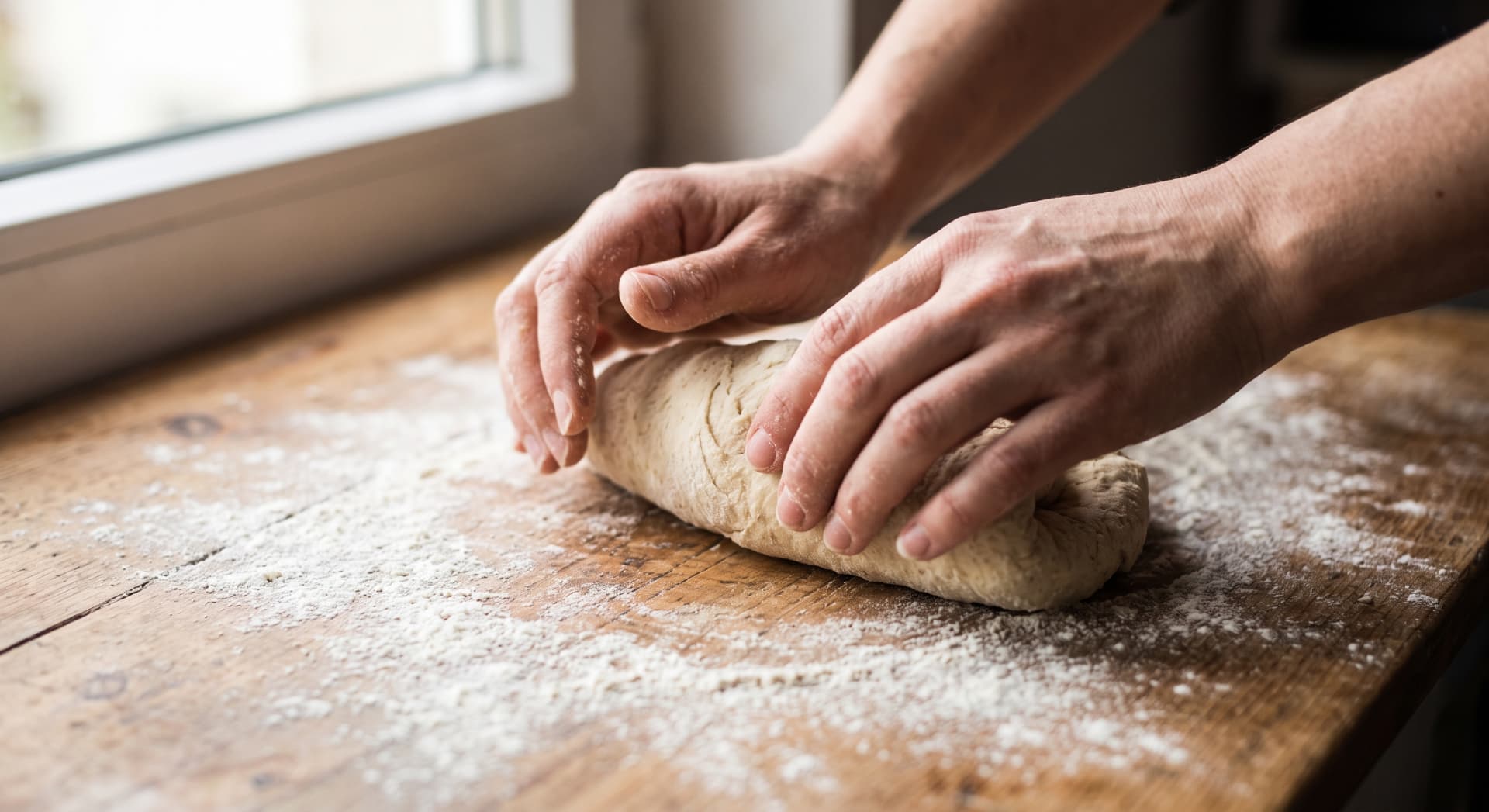
Work both flours, turmeric and salt with water into a soft dough. Coat with sesame oil and rest, covered, for at least two hours. This rest is what allows the paper-thin stretch.
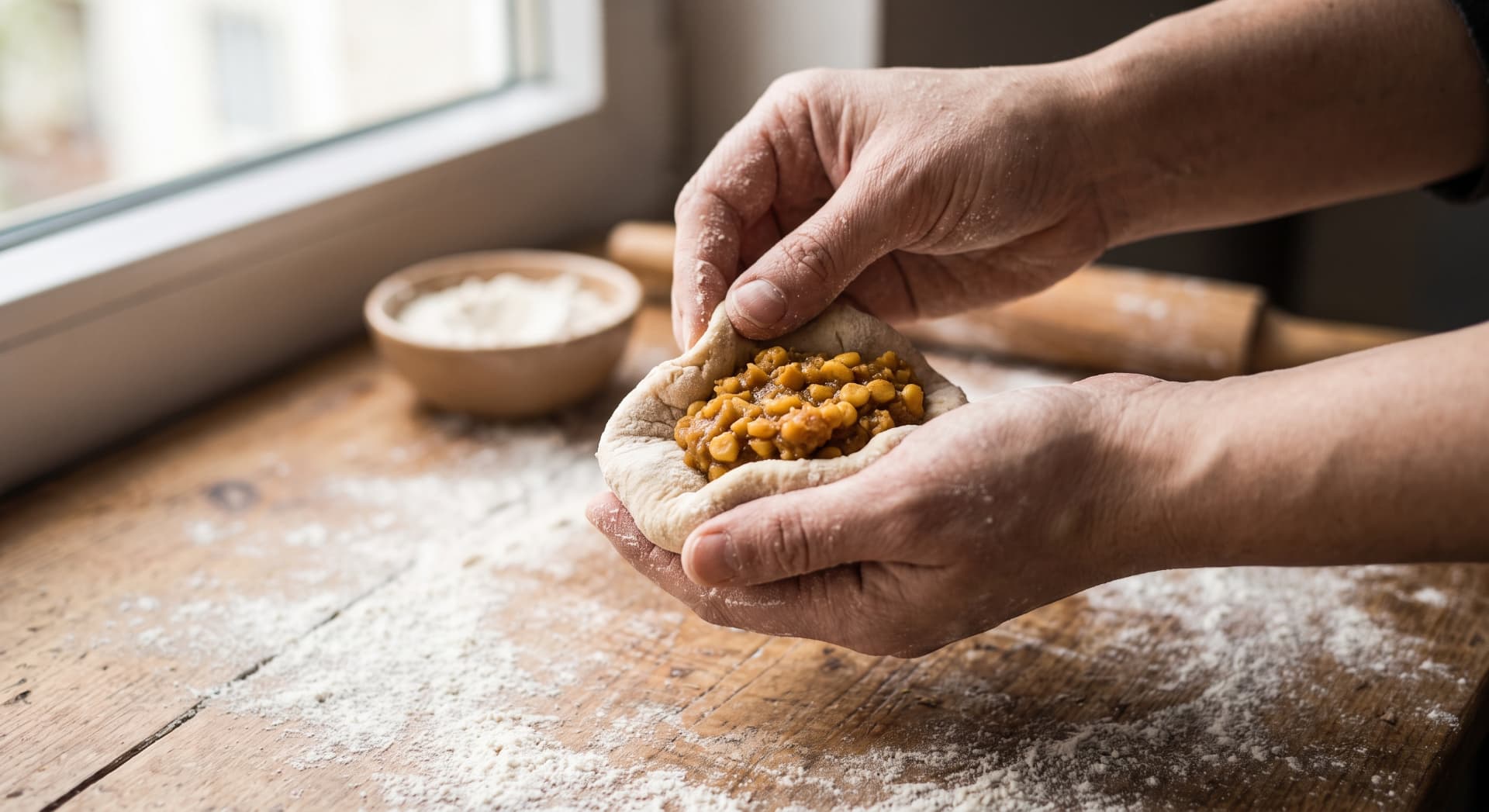
Flatten a portion of dough, enclose a slightly larger ball of puran, seal the seam, then roll outward with even pressure until translucent.
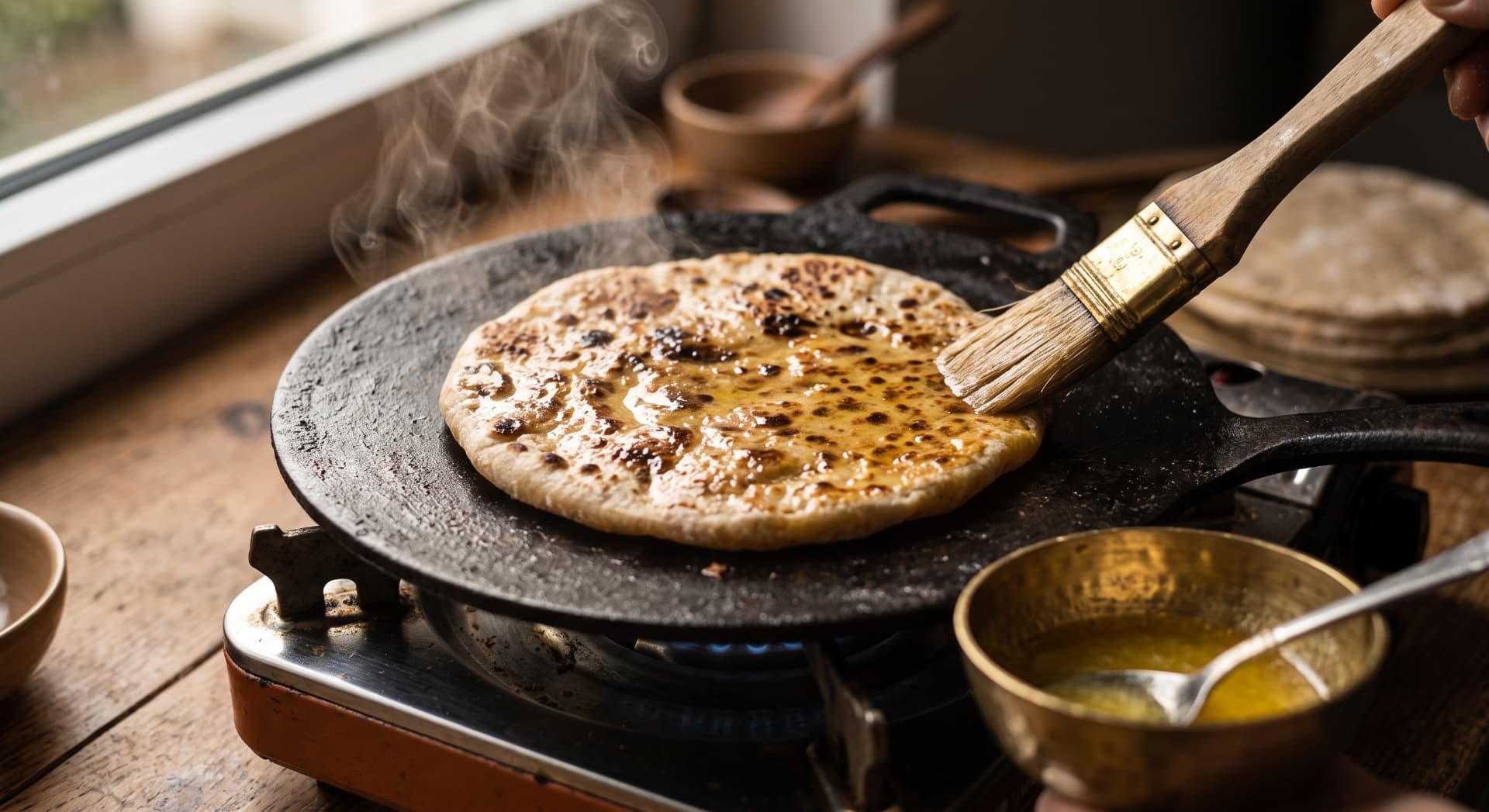
Cook on a medium tawa until pale golden spots appear, turning once. Brush with ghee at the end rather than the beginning.
Serve warm with a spoon of ghee, warm milk, or the reserved dal liquid seasoned as kattu.
Calculated per piece using the reformulated whole-grain wrapper.
| Serving size | 1 bobbatlu (approx. 85 g) |
|---|---|
| Energy | 265 kcal |
| Carbohydrate | 46 g |
| of which sugars | 19 g |
| Protein | 6 g |
| Fat | 6 g |
| Dietary fiber | 4.2 g |
| Sodium | 48 mg |

About the Researcher
Sarada Kumari Mitana is a chef and food researcher whose work sits between the professional kitchen and the nutrition laboratory. Her research documents traditional South Indian preparations with the same rigour applied to modern food science, treating heritage recipes as subjects of study rather than nostalgia.
Her current work centres on bobbatlu: tracing its textual history from the Manasollasa forward, cataloguing its regional forms, and testing whether the dish can carry a higher whole-grain and fiber load without losing what defines it.